Abia Specialist Hospital Performs First Major Brain Surgery on 19-Year-Old Accident Victim

Abia Specialist Hospital Performs First Major Brain Surgery on 19-Year-Old Accident Victim
The Abia State Specialist Hospital and Diagnostic Centre, Umuahia, has successfully performed its first major brain surgery on a 19-year-old motorcycle accident victim, marking a significant milestone in the state’s specialist healthcare delivery.
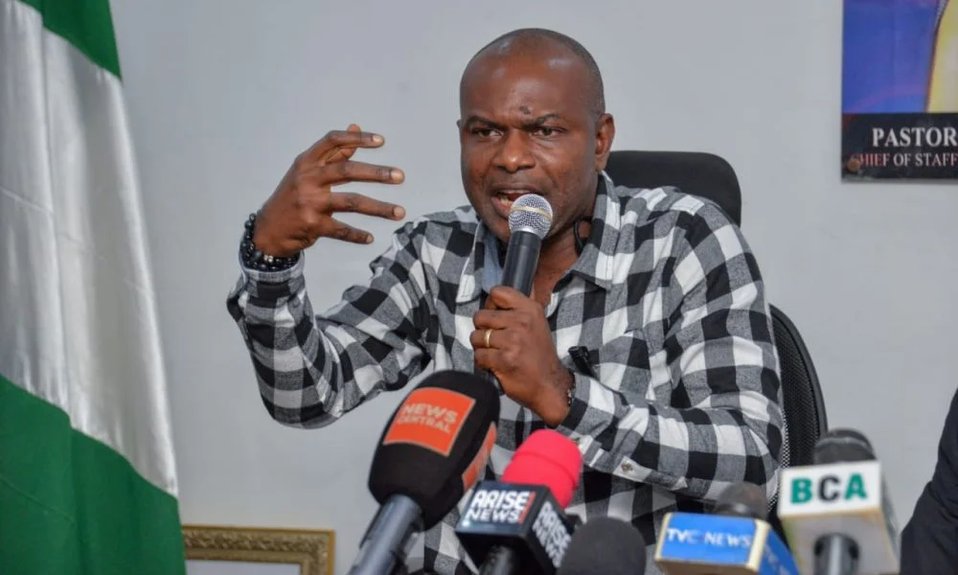
The Commissioner for Information, Prince Okey Kanu, announced the development on Tuesday while briefing journalists at the Government House in Umuahia. He attributed the achievement to sustained investment in the health sector by Governor Alex Otti’s administration.
According to Kanu, the patient was involved in a motorcycle accident on Sunday, October 4, and was subsequently rushed to the specialist hospital, where medical examinations revealed a large accumulation of blood inside his skull.
The patient’s condition required urgent neurosurgical intervention, prompting a four-hour emergency operation to evacuate the blood clot and control further bleeding.
Following the surgery, the patient was transferred to the hospital’s Intensive Care Unit (ICU) for close monitoring and further treatment. He was subsequently reported to be making satisfactory post-operative progress.
Kanu described the successful operation as evidence of the state government’s commitment to improving healthcare infrastructure and expanding access to specialised medical services.
He said the development reflected efforts made over the past two years to reposition the state’s healthcare system through strategic investments in facilities, equipment and specialist personnel.
Providing details of the operation, the Commissioner for Health, Professor Enoch Ogbonnaya Uche, disclosed that the patient arrived at the hospital in a deep coma, with a Glasgow Coma Scale (GCS) score of six out of 15, which later deteriorated to five.
Uche explained that the patient was in a life-threatening condition because severe bleeding in the brain was exerting pressure on the brainstem, making immediate surgery necessary.
He said transferring the patient to another medical facility could have further endangered his life, given the urgency of the situation.
The commissioner attributed the successful intervention to the availability of neurosurgical facilities and qualified specialists engaged by the state government.
“Because we now have facilities to undertake brain surgery, and then we have brain surgeons in the state employed by the Governor, that surgery was done,” Uche said.
He disclosed that the medical team evacuated more than 100 millilitres of blood clot from the patient’s brain during the procedure.
According to him, the patient had begun moving his limbs after the operation, an encouraging development as he continued receiving care in the ICU.
The Chief Medical Director of the hospital, Dr Chimezie Okwuonu, said the operation was performed by a multidisciplinary team comprising Professor Uche, a neurosurgeon, the hospital’s neurosurgeon, Dr Kalu, and other medical personnel.
Okwuonu described the procedure as an important step towards expanding the hospital’s capacity to manage complex neurological conditions and perform advanced brain and spine surgeries.
He said the hospital was committed to strengthening its neurosurgical services to ensure that residents could access specialised treatment within the state without necessarily travelling elsewhere.
“Our mandate is to provide specialist services as a support to the primary health centres and the general hospitals. So, if we are able to offer these specialist services, that is where we actually fit into the ecosystem,” he said.
The medical director added that the achievement marked a new phase in specialist healthcare delivery in Abia, particularly for patients requiring neurological and neurosurgical treatment.
“We can comfortably say that for Abians who are in Abia State and for everybody in Abia State, we can provide a home for brain surgeries, brain and spine surgeries and anything related to the brain,” he said.
Okwuonu explained that the hospital already had a neurologist responsible for the medical management of brain-related conditions, while the introduction of neurosurgical services had strengthened its capacity to provide more comprehensive care.
“Now that we have looked into the surgical aspect of the brain, we can say that we are providing holistic care for any brain disease in this place,” he said.
He linked the development to the state government’s broader efforts to reduce medical tourism by expanding access to specialised treatments that residents might otherwise seek outside Abia.
The CMD cited previous initiatives to improve access to advanced procedures, including kidney transplantation, as part of the government’s efforts to strengthen local healthcare delivery.
He added that the successful brain surgery had reinforced the hospital’s determination to undertake more complex medical procedures and broaden its specialist services.
Okwuonu also expressed confidence that the development would boost public confidence in the state’s healthcare system and encourage more residents to seek advanced medical treatment within Abia.
He disclosed that the hospital, which previously had only one specialist consultant—a cardiologist—now had 28 consultants across various fields of specialist medicine.
According to him, the expansion of specialist manpower and medical services represents a significant step towards reducing the need for residents to travel outside the state for advanced healthcare.
The successful operation is expected to strengthen the hospital’s role as a referral centre for specialised medical care in Abia State, particularly in the treatment of complex brain and spine conditions.