Yola, Heat, Politics, And The Real Test Of Power
Uduma
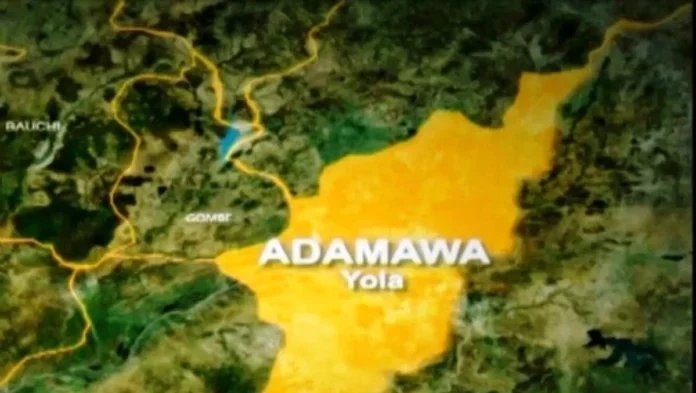
Yola, Heat, Politics, And The Real Test Of Power
Yola, Heat, Politics, and the Real Test of Power
By Uduma
YOLA — Last weekend, I visited Adamawa State for the first time, part of President Bola Ahmed Tinubu’s media team accompanying him on his official visit. Having been to Borno and Yobe before, my image of the North East had been shaped largely by headlines: insurgency briefings, humanitarian statistics, and grim photos from IDP camps.
Yola, however, challenged every preconception. Forty degrees Celsius greeted us at Lamido Aliyu Mustapha Airport, a heat that felt more like punishment than weather. Yet beyond the sun, it was the city itself that struck me: clean, orderly roads, smooth asphalt that rivals parts of the Federal Capital Territory, and a quiet, almost shy atmosphere. Yola did not match the caricatures I had heard.
Much of the local conversation centered on Governor Ahmadu Fintiri. Residents spoke of him as someone who delivered tangible results. On Monday, the city’s streets filled with crowds to welcome the President. Despite Adamawa being a People’s Democratic Party (PDP) state, the turnout carried neither bitterness nor distance—just engagement and interest.
President Tinubu commissioned several projects: the Yola Model School, an eight-lane road with an underpass, a remodeled High Court complex, and a new Government House office building. Governor Fintiri provided precise figures: N24.8 billion for model schools across 21 local governments, N15.6 billion for the road expansion, N5.5 billion for the High Court, and N6.3 billion for the Government House complex. Transparency, he demonstrated, is as important as construction itself.
Cultural performances highlighted the event. Yoruba troupes performed in Yola, while Rarara’s music electrified the crowd, showcasing the unifying power of culture even in politically charged settings.
The President’s speech, however, carried weight beyond ceremony. He publicly endorsed National Security Adviser Nuhu Ribadu, praising his integrity and commitment. The timing was significant: Ribadu is embroiled in a public feud with former Kaduna Governor Nasir El-Rufai, including serious allegations involving national security operations. By backing Ribadu in his home state, the President signaled that internal disputes would not shape federal security policy—a message with serious implications for governance and institutional stability.
Tinubu also highlighted macroeconomic progress, increased allocations to states, and investments in agriculture and human capital. He urged governors to direct resources toward poverty reduction and education, emphasizing that allocations alone do not transform lives—execution does. Yola’s roads, schools, and courts offered visible proof of effective governance.
Political choreography was on display as well. Five governors attended—Agbu Kefas (Taraba), Babagana Zulum (Borno), Caleb Muftwang (Plateau), Inuwa Yahaya (Gombe), and Mai Mala Buni (Yobe)—spanning party lines and sending a message of cooperation in a complex federation.
Yet the heat in Yola felt symbolic. Nigeria’s political and economic climate is intense, with simmering tensions, security challenges, and reform pressures testing leadership at every level. Governor Fintiri has earned political capital through visible projects; President Tinubu is implementing structural economic reforms that expand state revenues while stretching citizens’ patience. Both realities coexist.
The visit underscored a critical point: governance should be measured by competence and delivery, not party affiliation or political theater. Nigerians care that roads are fixed, schools function, and institutions operate effectively. Everything else—praise songs, gossip, rumors—is noise.
As our aircraft departed Yola, the sun still blazing on the tarmac, one thought remained clear: the real test of power lies not in appearances or allegiances, but in tangible, accountable governance. In Adamawa, that test is ongoing, and for citizens, the standard is simple: delivery over drama.