Nigerian Senate Passes Electoral Act Amendment Bill After Clash, Stormy Debate On Electronic Transmission
ohafiareporters
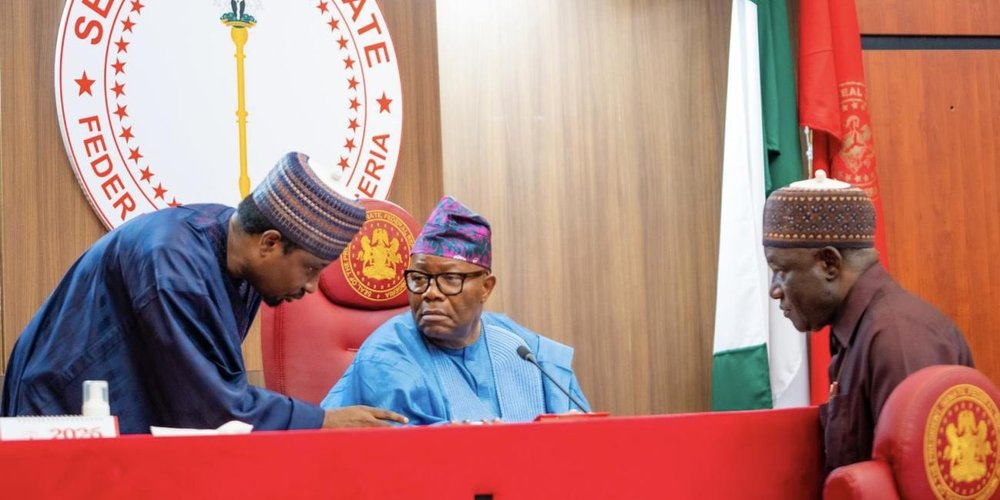
Nigerian Senate Passes Electoral Act Amendment Bill After Clash, Stormy Debate On Electronic Transmission
Proceedings at the Nigerian Senate turned tense on Tuesday as lawmakers passed the Electoral Act, 2022 (Repeal and Re-Enactment) Bill 2026 after hours of heated debate and procedural disputes, particularly over provisions on electronic transmission of election results.
The session grew rowdy when Senator Enyinnaya Abaribe demanded a formal division on Clause 60, a key section addressing the electronic transmission of results. His request exposed sharp divisions among senators over the future of electronic voting safeguards.
Despite initial indications that the request had been withdrawn, Senate President Godswill Akpabio said he believed the matter had already been resolved. Opposition lawmakers, however, disagreed and insisted that the clause be subjected to a recorded vote.
Deputy Senate President Barau Jibrin cited Order 52(6) of the Senate Standing Orders, arguing that it would be procedurally improper to revisit a provision already ruled upon by the presiding officer. His intervention further heightened tensions, with a brief confrontation observed between Senator Sunday Karimi and Abaribe on the chamber floor.
Senate Leader Opeyemi Bamidele clarified that he had earlier sponsored a motion for rescission of the bill’s passage, effectively nullifying previous decisions and reopening all clauses for reconsideration. He maintained that Abaribe’s call for a division was therefore in line with the Senate’s adopted procedure.
Akpabio later suggested that Abaribe’s insistence on a division was intended to publicly register his stance on electronic transmission of results. He nonetheless upheld the point of order and asked the senator to formally present his motion.
Rising under Order 72(1), Abaribe called specifically for a division on Clause 60(3), objecting to the provision allowing reliance on Form EC8A where electronic transmission fails. He proposed removing the clause that permits manual transmission in the event of network failure, warning that such a fallback could weaken electoral transparency.
During the vote, 15 opposition senators stood against retaining the proviso, while 55 voted in support, ensuring that the disputed clause remained in the bill.
Earlier, Senate proceedings had been temporarily stalled after lawmakers moved to rescind prior amendments and return the bill to the Committee of the Whole for clause-by-clause reconsideration. The motion was seconded and adopted, paving the way for fresh deliberations.
Clause 60 again became a focal point during the review, prompting murmurs across the chamber and intense consultations at the Senate President’s desk, followed by a brief closed-door session.
Before the rescission motion was adopted, several senators raised concerns about the timing of the 2027 general elections and technical inconsistencies within the proposed law. Bamidele told lawmakers that the decision to revisit the bill followed an announcement by the Independent National Electoral Commission fixing the next general elections for February 2027 after consultations with National Assembly leaders.
He noted that the proposed date conflicted with Clause 28 of the bill, which requires elections to be held at least 360 days before the expiration of current tenures. He also warned that conducting elections during the Ramadan period could negatively affect voter turnout, logistics, stakeholder participation, and overall inclusiveness.
Lawmakers further pointed to discrepancies in the bill’s Long Title and multiple clauses, including cross-referencing errors, serial numbering gaps, and other internal inconsistencies that required correction before final harmonisation.
According to a report by Channels Television, the debates and procedural battles underscored continuing disagreements over how best to guarantee credible and transparent elections through technology-backed result transmission.